
Satin oder Seide: Ein Stoffvergleich
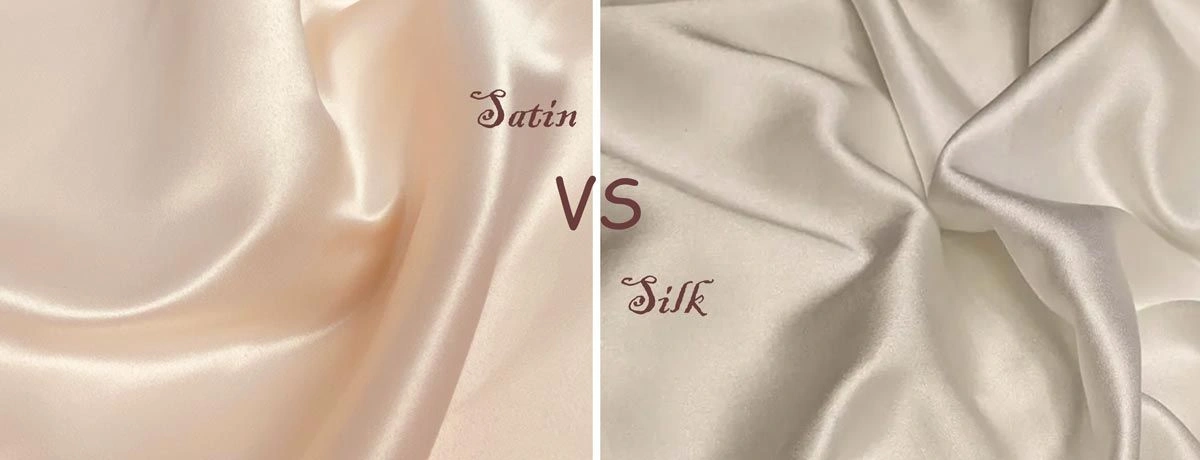
Seide ist eine Faser; Satin ist ein Gewebe. Seide ist ein natürlicher Proteinfaden, der aus Seidenraupenkokons gewonnen wird, während Satin eine Webtechnik beschreibt, bei der Fäden über vier oder mehr gegenüberliegende Fäden gelegt werden, um eine glänzende Oberfläche zu erzeugen. Das bedeutet, dass die beiden Begriffe nicht miteinander konkurrieren: Man kann Seide weben. in ein Satingewebe, oder alternativ Satin aus Polyester oder Nylon weben.
Wichtige Erkenntnisse
- Seide = Faser, Satin = Webart. Sie schließen sich nicht gegenseitig aus: „Satinseide“ ist Seide, die in Satinbindung gewebt ist.
- Seide wird wegen ihrer Atmungsaktivität und ihres natürlichen Proteinglanzes geschätzt; Satin wird wegen seines Hochglanzes und seines fließenden Falls geschätzt.
- Der Preisunterschied ist groß: Seide befindet sich im Premiumsegment, während Polyester- oder Nylonsatin für Großaufträge zu einem Bruchteil des Preises verwendet werden.
- Bei B2B-Beschaffungen sollten Sie Faserart, Webart, Gewicht/Denier, Breite, Ausführung und Mindestbestellmenge angeben, nicht nur „Satin“ oder „Seide“.
Seide vs. Satin auf einen Blick (Vergleichstabelle)
Der schnellste Weg, einen Käufer oder Kunden zu informieren, ist ein direkter Vergleich. Seide überzeugt durch Faserherkunft und Haptik, Satin durch Oberfläche und Fall. Hier sehen Sie, wie sich die beiden Stoffe in den Spezifikationen unterscheiden, die letztendlich den Preis beeinflussen.
| Seide | Satin | |
|---|---|---|
| Was es ist | Ein natürliches Protein Faser (Seidenraupenkokon) | A weben Struktur (4-über-1-Gleitkommazahl) |
| Glasfaseroptionen | Immer Seide | Seide, Polyester, Nylon oder Baumwolle |
| Oberfläche | Sanfter, natürlicher Glanz, beide Seiten ähnlich | Glänzendes Gesicht, stumpfer Rücken |
| Atmungsaktivität | Hohe, temperaturregulierende | Abhängig von der Faserart (niedrig bei synthetischen Fasern) |
| Drapieren | Leicht, flüssig | Schwerer, flüssiger, reflektierender. |
| Relative Kosten | Hoch | Niedrig bis mittel (synthetisch) / hoch (Seidensatin) |
| Gängige B2B-Anwendungen | Luxusbekleidung, Bettwäsche, Futterstoffe | Abendgarderobe, Bänder, Dekoration, Verpackung |
| Pflege | Chemische Reinigung / Schonende Handwäsche | Schonwaschgang, Bügeln bei niedriger Temperatur |
Wenn ein Kunde sagt: „Ich möchte Seide“, sollten Sie klären, ob er die Faser (Seide) oder den Glanz (Satin) meint. Diese eine Frage verhindert die häufigste Fehlinterpretation bei eingehenden Bestellungen.
Was ist Seide? (Faserdefinition)
Seide ist eine natürliche Proteinfaser, eine Naturfaser, die aus den Kokons der Seidenraupe gewonnen wird. Bombyx mori Die Seidenraupe stammt ursprünglich aus China und hat ihren Ursprung vor über 5000 Jahren, bevor sie sich durch den Seidenhandel verbreitete. Jeder Kokon wird zu einem einzigen, durchgehenden Seidenfaden abgewickelt. Deshalb fühlt sich echte Seide leicht und dennoch robust an und hat auf beiden Seiten einen weichen, gleichmäßigen Glanz. Sie ist atmungsaktiv, temperaturregulierend, hypoallergen und von Natur aus antibakteriell. Ihre Proteine enthalten über zehn Aminosäuren, die gut für die Hautgesundheit sind. Dies erklärt, warum dieser luxuriöse Stoff im oberen Preissegment der Bekleidungsindustrie angesiedelt ist. Seidenstoff Bettwäsche und hochwertige Futterstoffe.
Da die Seidengewinnung und -abhaspelung sehr arbeitsintensiv ist, bleibt Seide ein Premiummaterial. Für Großhändler bedeutet das, dass sich der Gewinn von Seide durch Haptik und Geschichte ergibt, nicht durch hohe Stückzahlen. Daher wird sie üblicherweise für exklusive Kollektionen und nicht für die Massenproduktion verwendet.
Was ist Satin? (Definition der Webart)
Satin ist keine Faser, sondern ein Gewebe: Der Begriff Satin bezeichnet eine Webtechnik, nicht eine Stoffart. Der Kettfaden (oder Schussfaden) gleitet über vier oder mehr gegenüberliegende Fäden, bevor er unter einem davon eingeklemmt wird. schweben Das ist es, was Satin seinen glänzenden Look und die matte Rückseite verleiht, sowie seine glatte, geschmeidige Oberfläche, die je nach verwendeten Fasern variieren kann. Ändert man die Faser, ändern sich Preis und Pflegeaufwand, doch der Glanz, das charakteristische Merkmal, bleibt gleich.
Diese Flexibilität ist der kommerzielle Vorteil. Ein einzelnes Satin Stoff Die Konstruktion kann für eine Luxuslinie aus Seide oder aus Polyester für die Herstellung von Bekleidung, Bändern und Dekorationen in großen Mengen, beispielsweise mit Optionen wie Polyester Satin Stoff für Damenbekleidung oder Paradies Satin Stoff Für Abend- und Brautkleider. Satin aus synthetischen Fasern ist preisgünstiger und weit verbreitet, allerdings büßt ein synthetischer Stoff einen Teil der Atmungsaktivität und Feuchtigkeitsableitung von Naturfasern ein, kann statische Aufladung erzeugen und mit der Zeit zu Pilling neigen.
Seide oder Satin: Was ist teurer?
Seide ist unbestritten das Premiumsegment. Einer der Hauptunterschiede zwischen den beiden Stoffen liegt nicht nur im Preis, sondern auch im Pflegeaufwand: Seide ist eine aufwändig zu verarbeitende Naturfaser, während der Preis von Satin von der verwendeten Faser abhängt und sich – anders als bei den meisten anderen Stoffen – auf das Gewebe und nicht auf eine einzelne Faser bezieht. Im Vergleich zu anderen Stoffen wird Seide wegen ihrer Haptik und ihres Prestiges geschätzt, weshalb sie einen hohen Meterpreis erzielt und Kollektionen vorbehalten ist, bei denen diese Eigenschaften den Preis rechtfertigen.
| Material | Glanz und Hand | Relative Kosten | Optimale B2B-Bestellung |
|---|---|---|---|
| Seide (Faser) | Weich, natürlich, atmungsaktiv | Hoch | Luxusbekleidung, hochwertige Bettwäsche |
| Seidensatin | Tiefster Glanz, fließend | Hoch | Brautmode, Abendmode, luxuriöse Futterstoffe |
| Polyestersatin | Hochglänzend, strapazierfähig | Niedrig | Bänder, Bekleidung, Dekoration, Verpackungen |
| Nylonsatin | Starker, kühler Glanz | Niedrig–mittel | Dessous, Besätze für Sportbekleidung, Futterstoffe |
Für die meisten Großabnehmer bietet Polyestersatin die gewünschten Eigenschaften. aussehen zu einem Preis, den Seide nicht erreichen kann, und zudem ist es pflegeleichter als Seide, weshalb es sich so gut für Kunden aus den Bereichen Bekleidung, Dekoration und Verpackung eignet, insbesondere in Kombination mit Polyester-Spandex-Stretchgewebe für maßgeschneiderte Stücke.
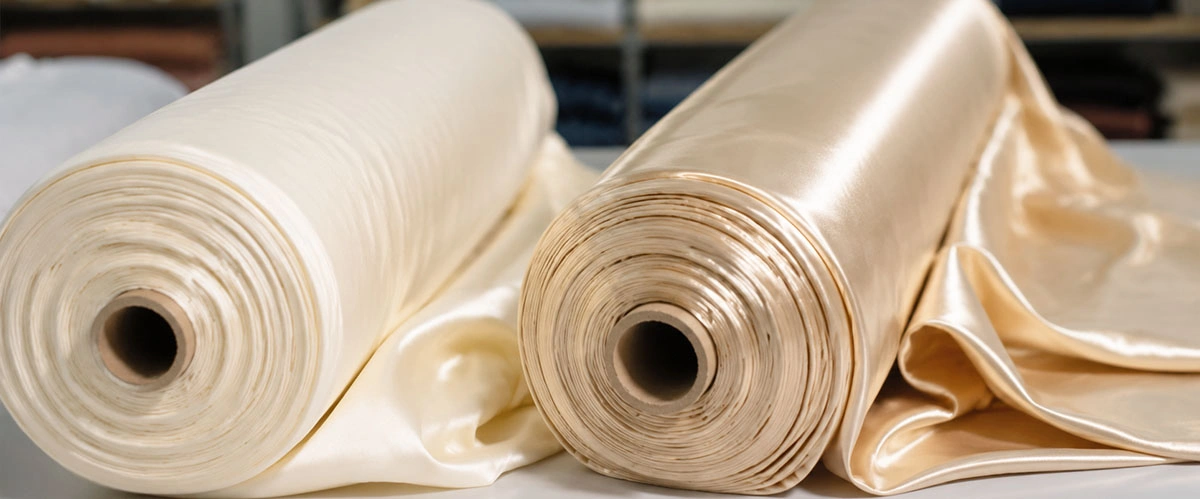
Wie werden Seide und Satin in der Innenarchitektur eingesetzt?
Beide Stoffe haben ihren Platz in der Inneneinrichtung, und Seide wie Satin erfüllen unterschiedliche Ansprüche. Seide verleiht Vorhängen, Kissenbezügen und luxuriöser Bettwäsche natürliche Schönheit. Seidenbettwäsche, Seidenlaken und Seidenbettlaken bieten eine glatte Textur, Feuchtigkeitsaufnahme und ein luxuriöses Gefühl. Satin verleiht Polstermöbeln, Satinbettwäsche und Kissenbezügen ein glänzendes, strapazierfähiges Finish und ist oft günstiger als Seide. Synthetischer Satin kann jedoch Körperwärme speichern und sich aufgrund seiner schlechten Feuchtigkeitsableitung wärmer anfühlen.
Für Stoffgroßhändler und Kurzwarenhändler liegt der praktische Vorteil in der Vielfalt: Das Sortiment umfasst sowohl eine Seidenlinie als auch leichte Stoffe. Chiffonstoffe Für Vorhänge und Gardinen sowie eine Linie aus synthetischem Satin bietet sich eine breite Auswahl an Produkten für anspruchsvolle Privat- und Geschäftskunden an. Seidenkissenbezüge sind eine hochwertige Option für die Haut- und Haarpflege, während Satinkissenbezüge eine ähnliche Optik für kleinere Budgets bieten.
Bezug von Seide und Satin aus MH (Lieferantenübersicht)
MH (Ningbo MHDas 1999 gegründete Unternehmen betreibt neun Fabriken auf einer Fläche von rund 350,000 m² mit mehr als 3,000 Mitarbeitern und unterhält langfristige Partnerschaften mit mehr als 2,000 Herstellern, die rund 10,000 Schneidermaterialien und Stoffe anbieten.
Für Bekleidungshersteller, Importeure und Großhändler für Dekorationsartikel bedeutet die Zusammenarbeit mit einem Lieferanten dieser Größenordnung den Zugang sowohl zu Standardtextilien als auch zu Spezialartikeln wie z. B. Rippstrickstoff für Poloshirt-Kragen und Gardinenösen und Vorhang Ösenringe:
-
Gleichmäßige Mengen — Filament-Polyester- und Nylon-Satins, die so gewebt sind, dass sie über Nachbestellungen hinweg einen gleichbleibenden Glanz und ein gleichbleibendes Gewicht aufweisen, sowie Seidenstoffe, die eine gleichbleibende Haptik beibehalten.
-
Materialien aus einer Hand — Kombinieren Sie Seide oder Satin mit passenden NähgarnSpitze, Bänder, Reißverschlüsse und Klebebänder aus derselben Quelle, einschließlich Nähfäden aus Polyester, alle in Stoff eingewebt und alles unter einem Dach gelagert.
-
Globale Logistikerfahrung — ein Lieferant, der bereits in über 150 Länder liefert und über anerkannte Handelszertifizierungen verfügt („Top 500 China Service Industry“, „AAA Trustworthy Company“).
-
Benutzerdefinierte Spezifikationen — Faserart, Denier/Gewicht, Breite und Ausführung werden auf Ihre Produktionsanforderungen abgestimmt, Mindestbestellmenge und Lieferzeit werden im Voraus besprochen.
Wenn Sie Angebote vergleichen, sollten Sie den Kauf von Seide als eine Entscheidung nach Spezifikationen und nicht nur nach Aussehen betrachten: Bitten Sie jeden Lieferanten, Faserart, Webart (Seide vs. Satin, Satin vs. Sateen), Gewicht/Denier, Ausrüstung, Breite, Mindestbestellmenge und Lieferzeit schriftlich anzugeben. Das Team von MH erstellt Angebote anhand derselben Variablen, sodass Sie Äpfel mit Äpfeln vergleichen können. Stöbern Sie im Satin-Sortiment oder kontaktieren Sie MH für ein Angebot nach Ihren Spezifikationen.


Häufig gestellte Fragen
Ist Satin dasselbe wie Seide?
Nein. Seide ist eine Naturfaser, die aus Seidenraupenkokons gewonnen wird; Satin ist eine Webart, bei der die Fäden schweben und so eine glänzende Oberfläche erzeugen. Satin kann aus Seide, aber auch aus Polyester oder Nylon gewebt werden, die ähnlich aussehen, aber deutlich günstiger sind. Der Unterschied zwischen Seide und Satin liegt in der Herstellung und Pflege. „Satinseide“ bedeutet speziell Seide, die in Satinbindung gewebt ist.
Ist Satin oder Seide besser für Bettwäsche?
Es kommt auf den Zweck an. Seide ist atmungsaktiv, temperaturregulierend und hypoallergen – ideal für hochwertige Bettwäsche. Satin (meist synthetisch) bietet eine glänzende, strapazierfähige und preisgünstigere Oberfläche für Satinbettwäsche und Kissenbezüge. Seide reguliert die Temperatur zudem besser, während sich synthetischer Satin bei kälteren Temperaturen wärmer anfühlen kann. Viele Großhändler führen beide Varianten, um mit einem einzigen Sortiment unterschiedliche Kundenbudgets bedienen zu können.
Kann Satin aus Seide hergestellt werden?
Ja. Satin ist ein Gewebe und kann daher aus Seide, Polyester, Nylon oder Baumwolle hergestellt werden. Authentischer Satin wurde historisch aus Seidenfasern gewebt und als reine Seide geschätzt. Seide in Satinbindung wird Satinseide genannt und vereint die Weichheit von Seide mit dem fließenden, glänzenden Fall von Satin. Sie ist im Vergleich zu synthetischem Satin deutlich teurer.
Welche Informationen benötige ich, um Seide oder Satin bei einem Lieferanten zu bestellen?
Bitte geben Sie Faserart (Seide/Polyester/Nylon), Webart (Satin vs. Satin), Gewicht bzw. Denier, Breite, Ausführung, Farbe, Mindestbestellmenge und Lieferzeit an. Durch die frühzeitige Bereitstellung dieser Informationen kann ein Lieferant wie MH ein präzises Angebot erstellen und bei Nachbestellungen gleichbleibende Qualität gewährleisten. Bei Satin und Seide sollten Sie außerdem die Pflegehinweise klären: Seide ist ein unglaublich weicher, empfindlicher Stoff, der per Hand oder im Schonwaschgang gewaschen werden sollte. Vermeiden Sie nach Möglichkeit heißes Wasser und Maschinenwäsche. Manche Satinsorten müssen je nach Faserart und Ausführung chemisch gereinigt werden und bieten möglicherweise nicht die gleichen Vorteile wie Seide.
